

The Return to Earnestness
What the popularity of Project Hail Mary, The Pitt, and more says about the moment we're in.

Note: This post mentions plot set up from Project Hail Mary, but avoids major spoilers.
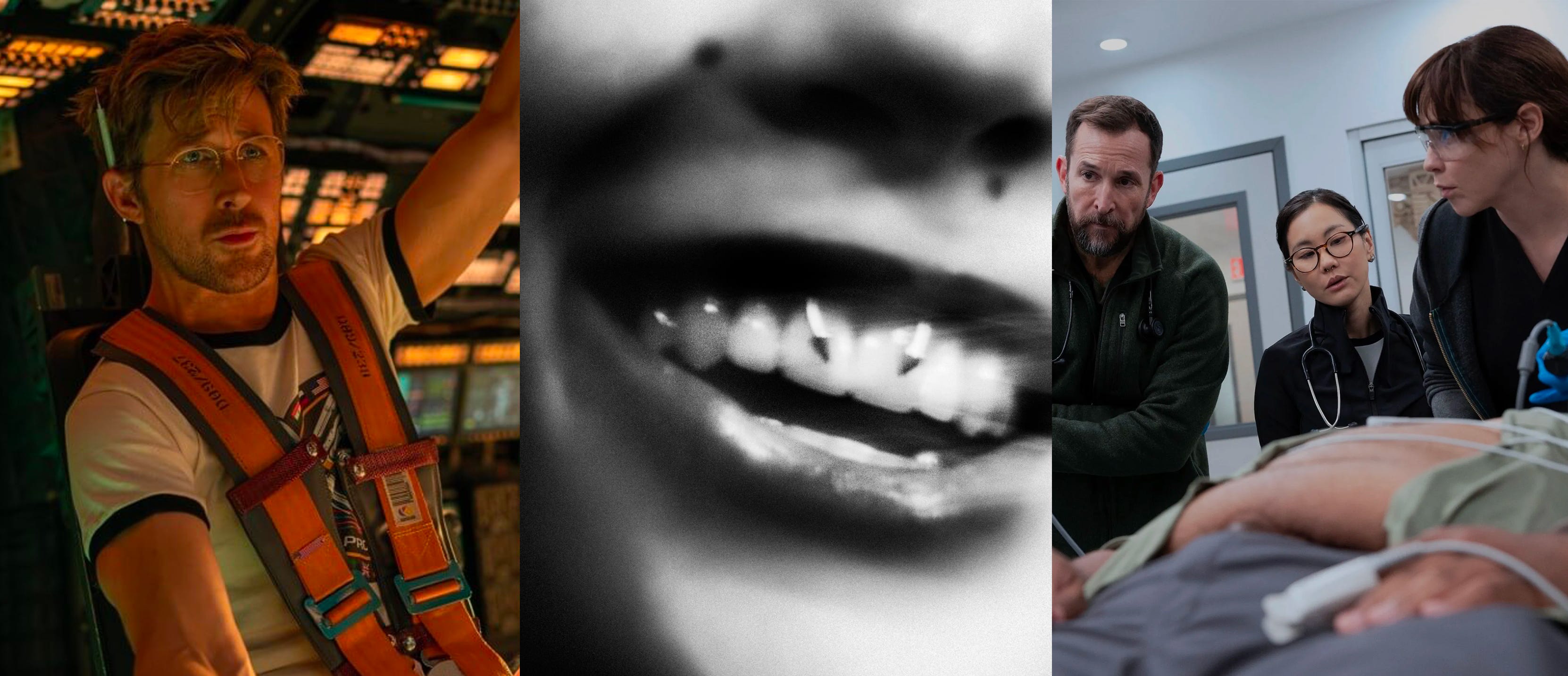
I came to Project Hail Mary late.
So on Wednesday night, exactly two months after its release, I bought a ticket, assembled my provisions (popcorn, Milk Duds, Diet Coke), and lowered into D12 with high expectations.
Not one person I knew disliked the movie.
The reviews were glowing, the box office numbers absurd.
But what stood out most was the tone people used when they talked about it: pure uncomplicated joy, free of irony or analysis. Nobody seemed concerned with what liking the movie said about them either. This was not an “I have a four hour Bulgarian doc about spoons in my Letterboxd Top 4” situation if you understand what I’m saying. The wholesome enthusiasm reminded me of a Spielberg drop in the ’90s: a big crowd-pleaser with enough heart and spectacle to make people leave the theater dazed, ready to talk about it on a landline.
Ryland Grace (Ryan Gosling), a middle school science teacher, wakes up alone on a spaceship with no memory of how he got there. Through flashbacks, we learn he’s been recruited by an international coalition of scientists led by Eva Stratt (Sandra Hüller, mother) to stop a sun-eating substance from wiping out life on Earth. Gosling plays Grace with a loose warmth, making all the science feel surprisingly casual. He’s a gifted teacher in the way all great teachers are: he makes his students forget they’re learning.
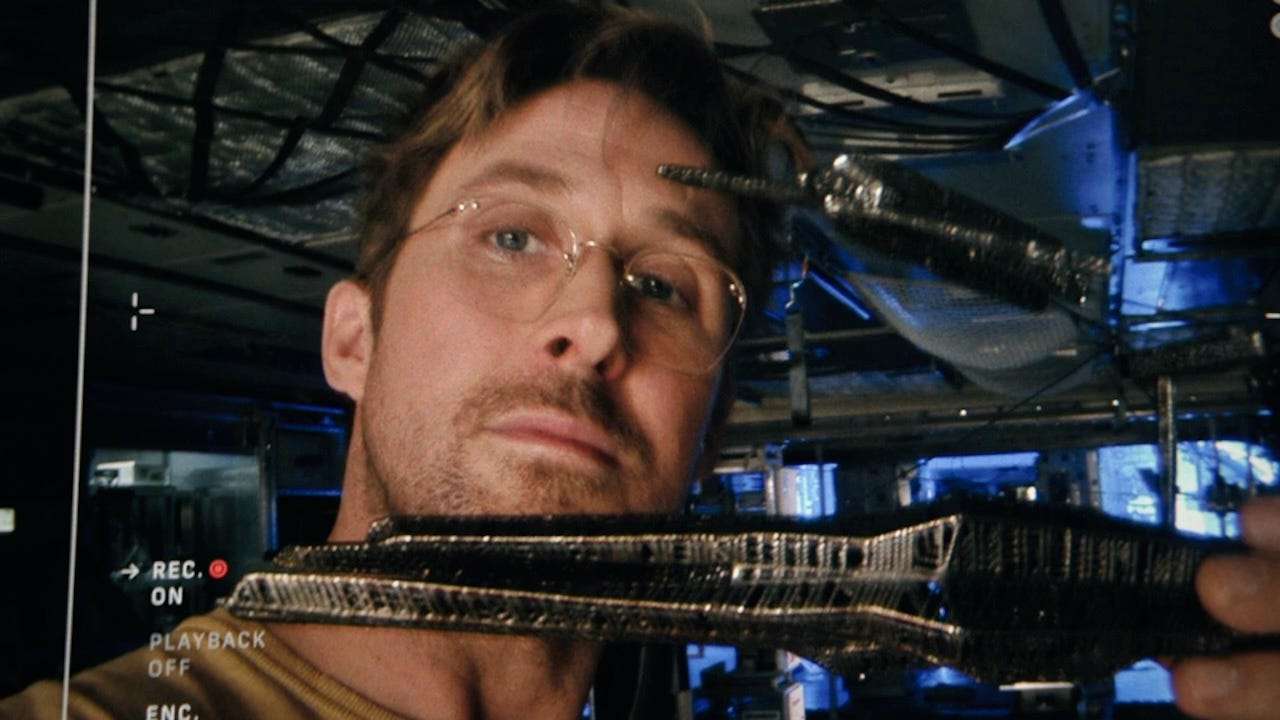
Eventually Grace encounters Rocky, an alien engineer facing the same extinction threat. Rocky is a pile of sentient rocks who becomes the emotional center of the movie immediately. What follows is a buddy comedy about two nerds trying to save their respective civilizations in space.
By the end, I’d spent two and a half hours reacting with no inhibitions. I had no sense of the shapes my face was making. I gasped. I laughed at jokes nobody else found funny. I openly cried. It was the full-body theater experience reserved for people who haven’t yet been taught to feel embarrassed by joy (children).
I left genuinely moved and weirdly grateful not just for the movie itself, but for movies in general. For the experience of watching a blockbuster that understands its primary responsibility is to make people feel something, together.
Lately, a handful of phrases have emerged to describe the specific appetite that Project Hail Mary satisfies. Some call it “hopecore.” Others call it “competence porn.” You can feel it everywhere: The Pitt, the Artemis II mission, Alysa Liu’s gold medal win, the Good Hang podcast, the entire concept of Olivia Dean. We are suddenly obsessed with watching talented people approach something (a crisis, a competition, even a conversation) in good faith.
This feels like a broader cultural shift: The Return to Earnestness.
After years of antiheroes, nihilism, and the performance of not caring, we are ravenous for sincerity. We have embraced Anne Hathaway again.
First, it’s worth defining what earnestness actually is.
Earnestness is not relentless positivity. It is not saccharine. In fact, it’s the opposite. Saccharine is a performance, a tap dance designed to smooth over discomfort, the belief that if you just act happy long enough, it will bend reality. There’s complacency in saccharine. Earnestness refuses to disguise the truth, especially behind irony or self-protective coolness.
To be earnest is to say: this is how I really feel. Without preemptively mocking yourself or diluting it into something more palatable. There is inherent vulnerability in its directness, which is why earnestness is so often mistaken for naïveté. In a culture trained to treat emotional restraint as sophistication, sincerity can read as a failure to understand the rules.
But there is plenty of proof that earnestness isn’t daisies and puddles.
Beyonce’s Lemonade is earnest.
Lena Dunham’s Famesick is earnest.
Anything Ryan Coogler has ever touched is earnest.

Earnestness is also cyclical, which is why we’re seeing its return now.
It faded after the Obama era. We overdosed on hope: the #MeToo reckoning, girlbosses, stomp-clap music, BuzzFeed journalism, Supreme Court Justices on tote bags…all manifestations of Millennial optimism and ambition, of a belief in institutions, in celebrating “the man,” in wanting to be part of the system. That collective earnestness (born, perhaps, from feeling we were in safe hands, that electing the first Black president meant the world was moving in the right direction) was then corporatized. It was Target using Pride to sell merchandise.
Earnestness quickly curdled into cringe.
“Cringe” started as a form of discernment, a shared vocabulary for pointing out behavior that felt forced, clueless or overly sweet. The image that came to mind was of your parents doing something embarrassing in public. Now, we’ve exhausted the phrase as a justified blanket statement for personal distaste, “cringe” has become a tedious expression at best, a lazy one at worst.
“Cringe” also feels like surveillance, an unwillingness to try or have fun if humiliation is even remotely possible. Nobody wants to be around that kind of paralysis, not even a spectator. “I am cringe but I am free” is a liberation mantra for people who have stopped being their own cops.
We’re already seeing cringe characters get redeemed through a sort of “they were right all along” resurrection tour.
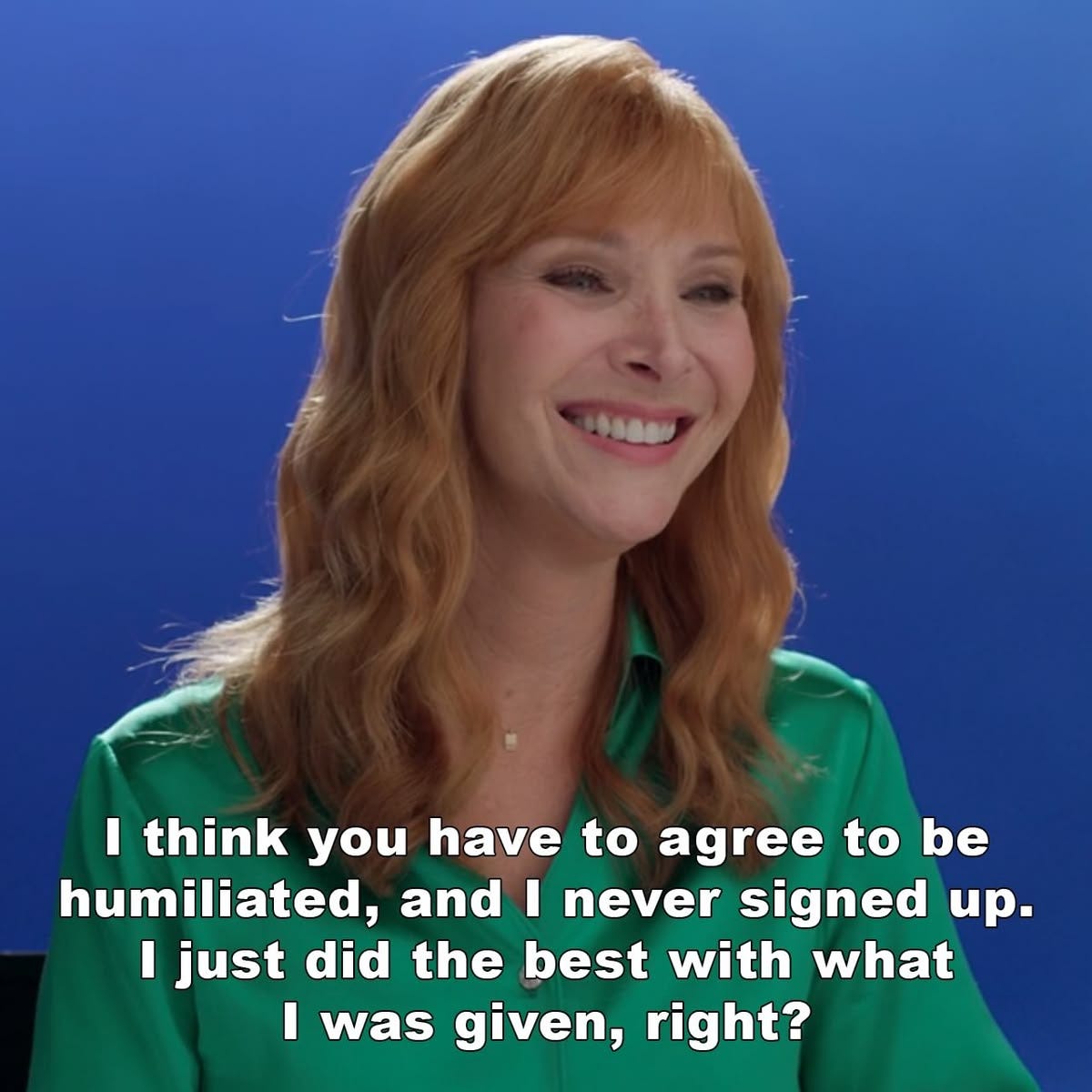
In the final season of The Comeback, one of television’s most gloriously cringe characters, Valerie Cherish, gets a redemption arc. Jane, her documentary director who previously communicated exclusively through eye-rolls, defends her on a talk show. Her former showrunner and tormentor Paulie G. sends an empathetic text during a cancellation storm. A David E. Kelley-type offers her the role she’s been waiting for, after watching her navigate a near career-ending media disaster with surprising grace.
Suddenly the audience is no longer watching through our fingers.
We realize Valerie’s cluelessness and persistent effort are endearing and maybe even aspirational. Everything she did in her attempt to stay relevant worked.
She meant no harm. She did her best. Isn’t that what we’re all doing?
The irony and cynicism that replaced earnestness arrived because a replacement for feeling itself was cope, perhaps even pragmatism. The way we’ve learned to reckon with the current global landscape is by detaching and dissociating. It’s understandable given what we’ve had to metabolize in such a short span of time. It would be impossible to appropriately calibrate the headlines and still function. The psychologically correct reaction might be to lie face-down on the kitchen floor whispering, “Oh wow,” until the sun explodes.
“It’s not that deep” has become the verbal manifestation of that detachment, a reliable catchall for staying unbothered. My experience with “it’s not that deep” 80% of the time has been that either it is actually quite deep for the person saying it, or it’s a bit dismissive. Sometimes both. The other 20% of the time, it’s the correct response to reply-guys being unnecessarily granular.
“It’s not that deep” is effective armor, but used too often, it can convert into nihilism. If nothing matters, nothing can hurt you. But you also numb yourself to the joy and fulfillment (not to mention progress) that come with caring about things. And if it’s all pointless anyway, what is left? What are we all doing?
—
Despite living in a streaming landscape that feels like opening twelve tabs and forgetting where the music is coming from, appointment television still exists and it is on HBO Max. No show in its current lineup is more universally beloved than The Pitt. The most medically accurate hospital drama in history, each episode unfolds in real time meaning one hour of television equals one hour in the ER, the season amounting to a full shift.
Led by Dr. Robby (Noah Wyle), a team of highly capable doctors and nurses ricochet through the hospital saving lives, triaging national disasters, and somehow still remembering details about patients beyond the thing currently protruding from their abdomen. This is said competence porn: people with stethoscopes and trauma shears talking fast and flying down hallways with the choreography of a tight Fosse number.
The characters are also flawed. But their commitment to functioning as a team, even while living their own interior dramas, is a reminder of human capacity.

Pretty quickly you realize that despite what we’ve long assumed doctors make, there is no amount of money that feels commensurate for what these people witness and have to tackle emotionally. Nobody is seeing all that before lunch because of a solid dental plan. They have to be doing it because they believe in what they’re doing. In other words, they care about other people, a concept that, often feels like it is no longer in the room with us.
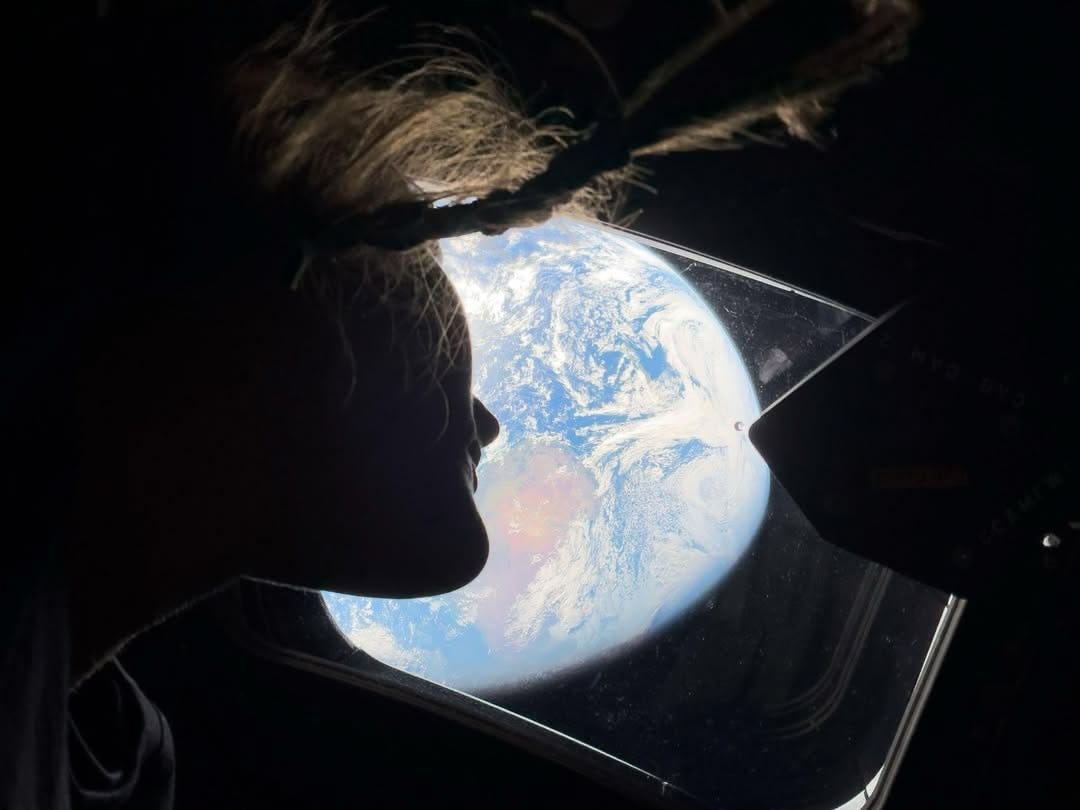
A real-life version of this came with Artemis II.
Traveling further away from Earth than any humans in history, four astronauts worked together and experienced pure, uncut awe as the rest of us watched from below. We saw photos of Earth looking like water with a side of land. We saw the moon’s dark side spilling out unexpected colors. We cried as they named a crater Carroll after Commander Reid Wiseman’s late wife: proof that even in space, humans insist on dragging love into everything.
When 19-year-old Alysa Liu stepped onto the ice at the Winter Olympics, her joy was invigorating. Her routine felt untouched by hunger for validation or perfectionism. She did not look like someone carrying the hope of a nation on her back. She looked like someone having a really good time.
Right after, Liu exclaimed: “That was fun!” as if she’d just finished a particularly pleasant bike ride instead of making strangers sob in their living rooms.

Everything now arrives with a justification inquiry. Every moment attached to productivity, every hobby expected to become content, the answer to some hypothetical interview question about your interests and routines. You can’t even wash dishes anymore without optimizing the experience with a podcast.
Liu reminded us that doing something because you love it is the point. It felt impossible for her not to win the gold, because before anyone handed out medals, it already looked like she had one.

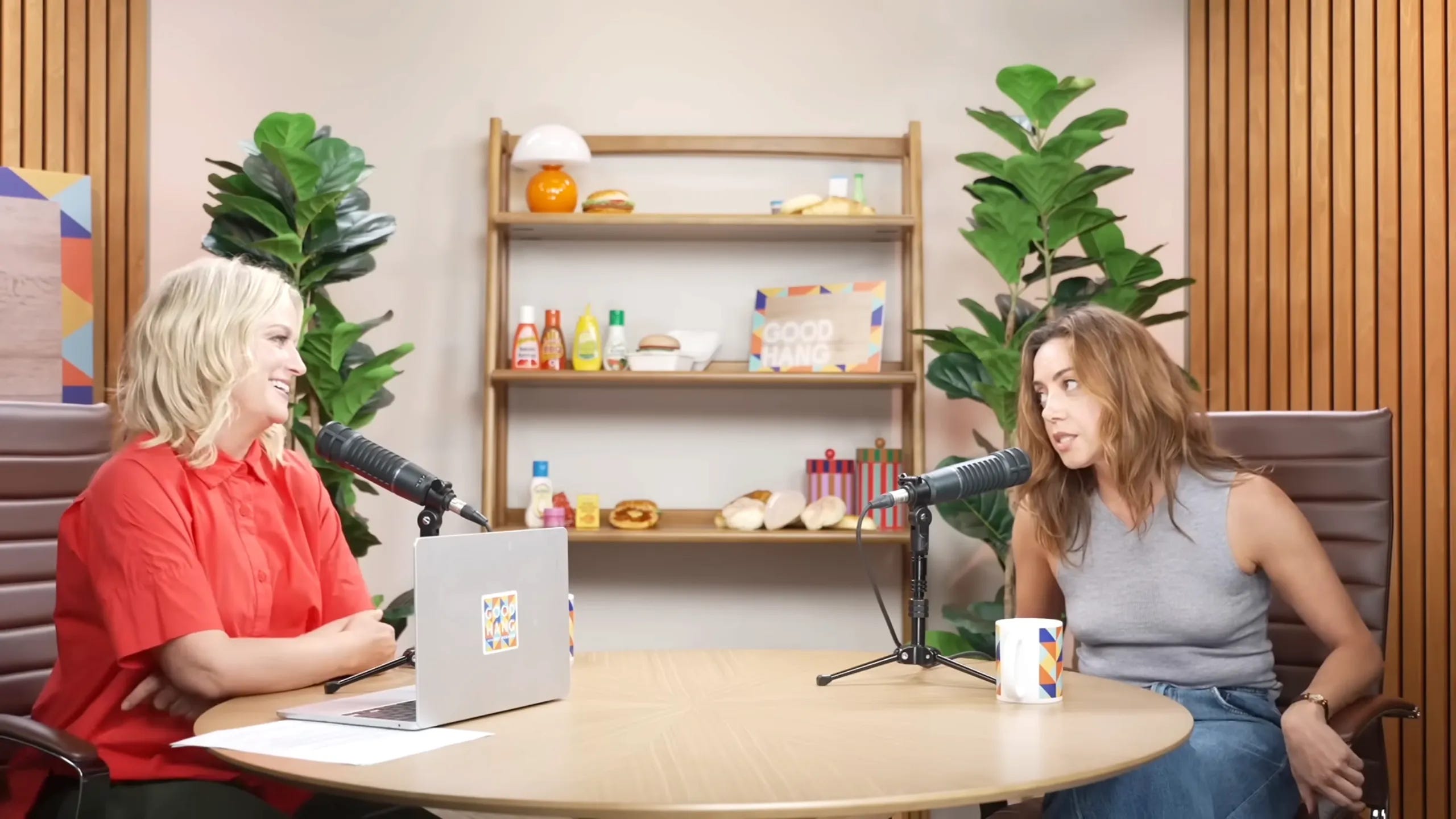
Amy Poehler’s Good Hang feels like walking into a kitchen where two people have been talking for a while and nobody stops when you enter. Somewhere a casserole is cooling. Actors, comedians, musicians rotate through, but celebrity stops being the point. Amy asks questions with an invisible touch, like someone brushing lint off your sweater before you noticed it was there. Which is probably why it’s the thing so many podcasts insist on becoming and rarely do: intimate. It’s sincere without being syrupy, funny without performing its own funniness, charming without winking at you afterward. It’s proof that comedy and sincerity are not at odds.
—
After so many years of snark serving as the cultural vocabulary, there’s a prevailing sense that people want to see hope and competence take center stage, but not in a way that feels patronizing. Nobody wants to be handed a juice box and told everything is fine.
Maybe what’s changing is that we’re recognizing hope less as embarrassing or sanitizing (or like denial) and more like the nourishment we desperately need right now.
Maybe everyone is exhausted from self-monitoring and also, monitoring everyone else, to prove their own cleverness and taste.
Which is hopeful in itself.
Human beings have always had terrible taste right before having slightly better taste. We tend to overcorrect before we recalibrate. We eat mayonnaise salads, we buy tiny sunglasses that make us look like insects, we convince ourselves that low-rise jeans are a good idea. Then, eventually, we come to our senses. Maybe culture works the same way, exhausting one impulse before moving on to the next. Maybe every so often we look up from the pile of things demanding our attention and think: actually, I’d like something that reminds me we’re better than this.
Thank you for reading!
If you liked this essay, consider becoming a subscriber.


I have encountered certain people in life that I can only describe as “uncontrollably themself all the time.” Always offending, always stepping in it at work or at home, and always surrounded by people that love them. Reading your piece I have hope that the world may be turning a corner to recognize the value in these people that don’t play the game not cause they refuse but cause they can’t.
Thank you for unpacking this. I'm at a loss for words on how to react with it so instead, I've sent it to everyone I know. Brilliantly done.